CAN-SPAM slamming popular choice for journalists
Posted on August 9th, 2004 at 8:54 am by Brandon Phillips

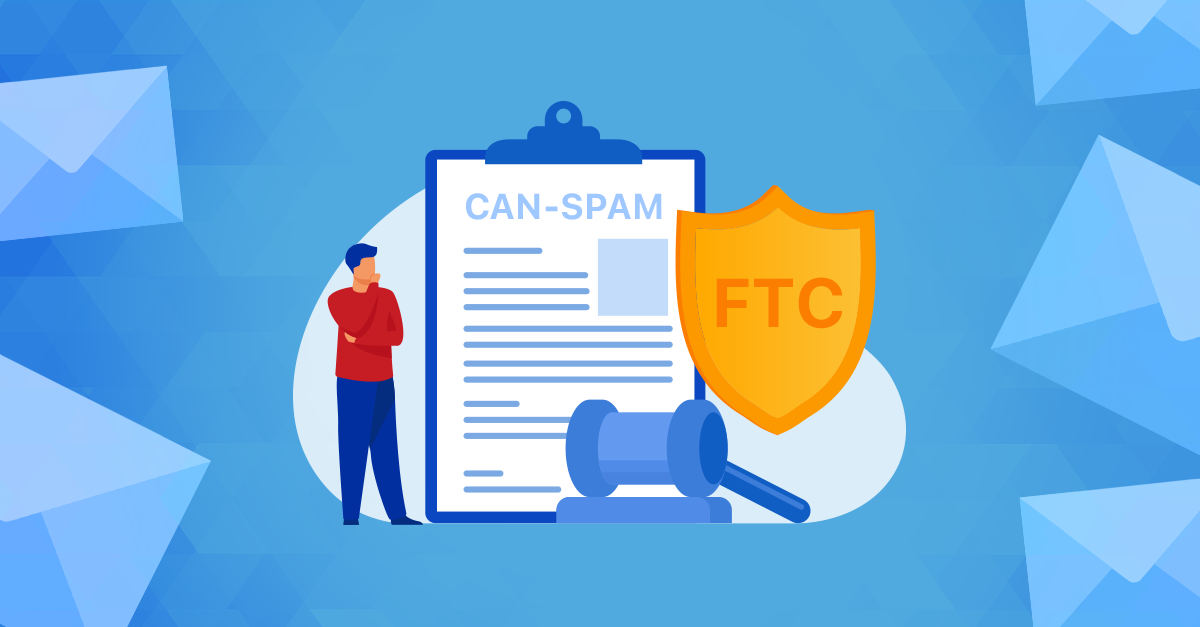
Whether or not you believe MX Logic’s monthly figures (always significantly more dire than everyone else’s - They reported that more than 80% of email was spam while everyone else was saying it was closer to 60%), one thing is clearly true: journalists love to hate the CAN-SPAM Act. Anyone who’s actually interviewed the FTC staff or talked to experts will write articles containing facts such as that “the law was never intended to stop the threat of spam” or “education of the public and various anti-spam technologies and practices in ADDITION to the law” will stop the ever-rising tide of spam. But you’ll never see those articles, because either no one likes writing them or maybe no one likes reading them.

But if you look at the sheer number of articles actually being written and published by major news organizations, you’ll see about a 4-1 ratio of stories named something like “CAN-SPAM Big Bust” and similar titles. If your local evening news seems to lead with stories that “bleed” and always want to tell you the bad news, then it would seem online news is no different. Let’s forget the merits of the CAN-SPAM Act and just complain that we individually have spam still in our inboxes. Let’s forget that the new laws have allowed Microsoft and others to begin lawsuits at over 100 major spamming operations around the world, with more being filed each week. Let’s forget that spammers are already being put out of business as a result of the lawsuits. Let’s also not talk about the fact that CAN-SPAM compliance (while definitely having a slow start) grows constantly.

I’m not saying that CAN-SPAM is perfect. I’m not saying it couldn’t have gone further. I’m not even commenting on enforcement. What I am saying is that I’m angry that powerful news organizations are quick to publish negative stories over any other kind. You might be saying “Well, duh” and you’d be right to not be surprised by this accusation. But consider that if CAN-SPAM truly is doing what it was desgined to do, then what can we gain by punishing it over and over with negative reviews and commentary? Why get the public up in arms at the law when they should be talking to their ISPs, software companies and local representatives about the continuing flow of spam?

Consumer Reports’ Answer to Spam
Posted on August 6th, 2004 at 1:05 pm by Brandon Phillips

Here’s the list of things to do to avoid spam, according to Consumer Reports. I’m gonna reprint a few of the items for comment.


Don’t buy anything promoted in a spam message. Even if the offer isn’t a scam, you are helping to finance and encourage spam.

This is true and helpful in the same way that saying that telemarketing will be eliminated when people stop ordering things from the phone. YOU can read the right publications, take the right actions, get involved, even stop using email altogether… but spam will still go on, because others will take part in it.


Don’t reply to spam or click on its “unsubscribe” link. That informs the sender that your e-mail address is valid.

Good advice. Although, if you have LashBack, the rules change. Now you CAN unsubscribe safely and get off of spam lists.


If your e-mail program has a preview pane, disable it to prevent the spam from reporting back to its sender.

A little unrealistic. The preview pane is a highly useful tool for so many reasons, not the least of which is helping to determine the messages from Bob Smith (someone you know personally) from the messages that come from Bob Smith (a spoofed spammer). Shutting this down is not going to keep anyone from opening the occasional spam message by mistake.


Use one e-mail address for family and friends, another for everyone else.

This is an acceptable solution as long as you don’t mind checking multiple addresses and occasionally discarding and setting up new ones. Many of us are quite happy with having just one memorable address to worry about.


If your Internet service provider is filtering your e-mail and you still get lots of spam, the ISP may not be filtering effectively. Check its filtering features and compare them with those of competitors.

This supports the myth that server-side filtering can cure all spam ailments, and it just isn’t so. Yes, you should work with an ISP that filters spam (most do an incredible amount of filtering). But even if an ISP is getting 95% of 10 million spams a day (a very realistic number, by the way), that’s still half a million spams being delivered. More importantly, because we sometimes ask to be on lists which are sometimes sold to spammers, as a company with tens of thousands of subscribers, there’s no way for your ISP to know what you wanted and what you didn’t want out of that half million messages being delivered to their customers.

The best method for a consumer is to have a ‘client-side’ solution - a program like LashBack that resides on your PC - that lets you choose right there which messages you want and which you don’t want. You can try and lay the blame at the ISPs door, but it won’t get rid of your spam. Try getting your ISP to supply you with a spam-fighting service on your computer. Some ISPs provide LashBack to their customers in addition to their server-level solutions.

Pfizer going after Viagra spammers
Posted on August 6th, 2004 at 9:52 am by Brandon Phillips

It was bound to happen. Anyone who’s gotten a deluge of Viagra spam has probably wondered why Pfizer wasn’t nipping it in the bud, so to speak. Well, now they are.

Challenge-Response: The answer to spam?
Posted on August 4th, 2004 at 8:44 am by Brandon Phillips

A writer who reviewed ChoiceMail is really excited about the 100% spam-free effects it has. I’ll be the first to tell you: challenge-response works. You have a white list of approved senders. Anyone who’s not on the list who tries to send you mail is automatically challenged (sent an email with a form for them to fill out to prove they’re a real person). If they fill it out and you approve them, they get on your white list. If they don’t fill out the form, they’re messages are blocked. It sounds good, but the reviewer doesn’t address one important fallout issue: false positives.

There might be quite a few ‘automated senders’ who can’t fill out the challenge form - automated senders whose email you wanted. For instance: newsletters, online purchase receipts, membership confirmation emails, technical support responses, notices. In short, there are lots of addresses we can’t anticipate for a white list. In challenge-response, you are pretty much guaranteed some (maybe a lot of) false positives. For some, this might be a fair trade-off. But they should at least be aware of that, before they purchase, don’t you think?

The finances of spam
Posted on August 2nd, 2004 at 9:54 am by Brandon Phillips

This is an important article, if for no other reason than the following paragraph:

“This is all about cost,” Selis said. “As long as it’s still cheaper for spammers to take the risk of drawing a lawsuit, and that risk is fairly low, they will continue to send spam. When the balance gets shifted, when there’s enough enforcement action, when there are financial consequences, then I think we will see the amount of spam drop off.”

Financial and criminal consequences, when consistently delivered, will force most white-collar criminals to relaize what they’re doing is not worth the risk.

Pop-Up Extortion
Posted on August 2nd, 2004 at 9:47 am by Brandon Phillips

These two Californian college kids came up with a ‘great’ idea. They’d use pop-ups to sell anti-popup software. Worse yet, they pummeled computers with popups over and over, so that the computer was essentially held hostage until their software was purchased.

Here’s the good news. The FTC got all over it, settling with the two guys out of court, effectively sending the two kids back to their classes. Let’s hope they’re taking a course on ethics this semester.